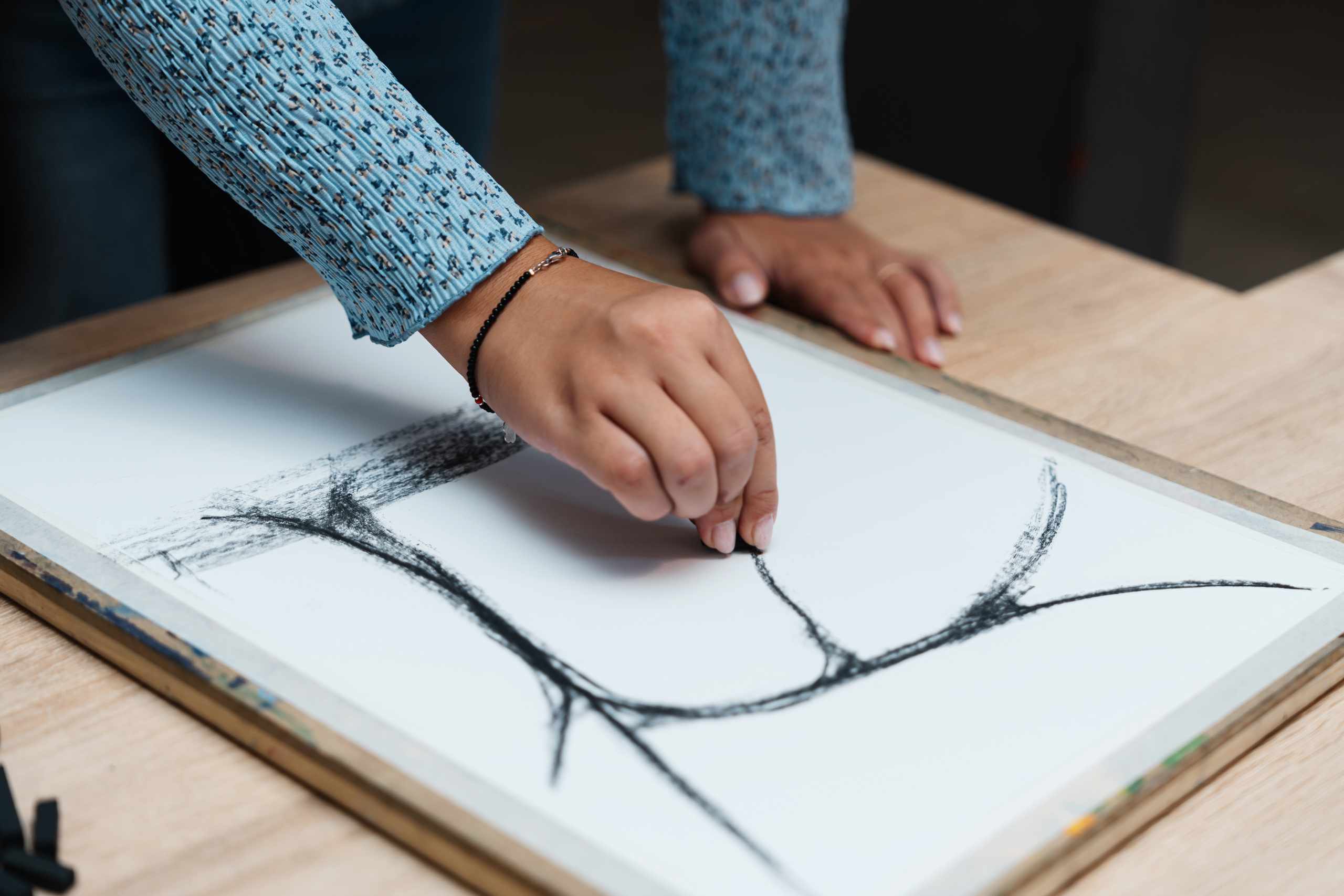
Most lines get smudged because we keep reworking them as we are drawing them. Instead of making one clean line, the pencil goes forward, back, forward again and draws multiple smaller lines along the same route. The result might reach the end of the line, but the outline will be blurry and shaky. Drawing better lines doesn’t mean making all lines flawless. It means making all lines purposeful and keeping some mistakes visible for a moment so we can understand them.
Look at the beginning and end of the line you want to draw. For straight lines like the edge of a book or a box, visually trace the line with your eyes. For curved lines, determine if the curve is smooth or angular. Taking a second to observe this will help reduce the urge to guide the pencil continuously. The longer line should be controlled by the arm or the hand. Shorter lines can be done with the fingers. The key here is to decide on the movement first before applying pressure.
Drawing construction lines lightly makes this easier. Start by creating a block-out using simple geometric shapes like rectangles, cones, or circles. Check the proportions and angles before darkening the outlines. If the top of a rectangular shape is slanted wrong, correct it with another construction line rather than redrawing the same outline. When the block-out seems correct, choose the outline that best represents the object and trace over it with a firmer stroke. The final line should help define the object rather than obscure the block-out process.
Here is a helpful exercise. On half of your sketchbook page, draw a series of lines connecting two dots. Put two dots near each other and practice tracing the line with your pencil before actually drawing the line. Vary the distance and angle between the two dots. Then do the same exercise with curves. Don’t redraw the line just because it didn’t land perfectly on the dot. Compare a few attempts. It will be easier to see the movement of the pencil.
Moving at a reasonable pace helps with this as well. Moving very slowly causes unnecessary corrections and wavering lines. Moving too fast causes a lack of care in the lines. Try different speeds and find one that works for you. Keep pressure moderate. Pressing too hard leaves bad marks that are difficult to fix during the sketching process. Light lines let you focus on getting the angles correct, then press harder on the lines that you want to emphasize.
As you start to draw from life again, pay attention to how many times you go over the same outline. A good line doesn’t have to be perfectly straight. It just needs to look more deliberate than a thick layer of scratchy lines. Notice if your hand extends further before stopping, if the construction lines are less intense than the finished lines, and if you can draw one line to capture an angle that used to take four or five lines. These are more telling signs of improvement than pages with every mistake erased.